
Estoril's History Thru Numismatics...

I have always been fascinated by the layers of history that accumulate in a single place, and living here in Estoril has given me the chance to walk through millennia of human stories. As someone who loves numismatics, I find that coins tell us more about these periods than almost any other artifact. They reveal who ruled, what people valued, and how commerce flowed. So let’s go through the remarkable history of this coastal Portuguese town where I now make my home, with special attention to the currencies that changed hands here across the ages.
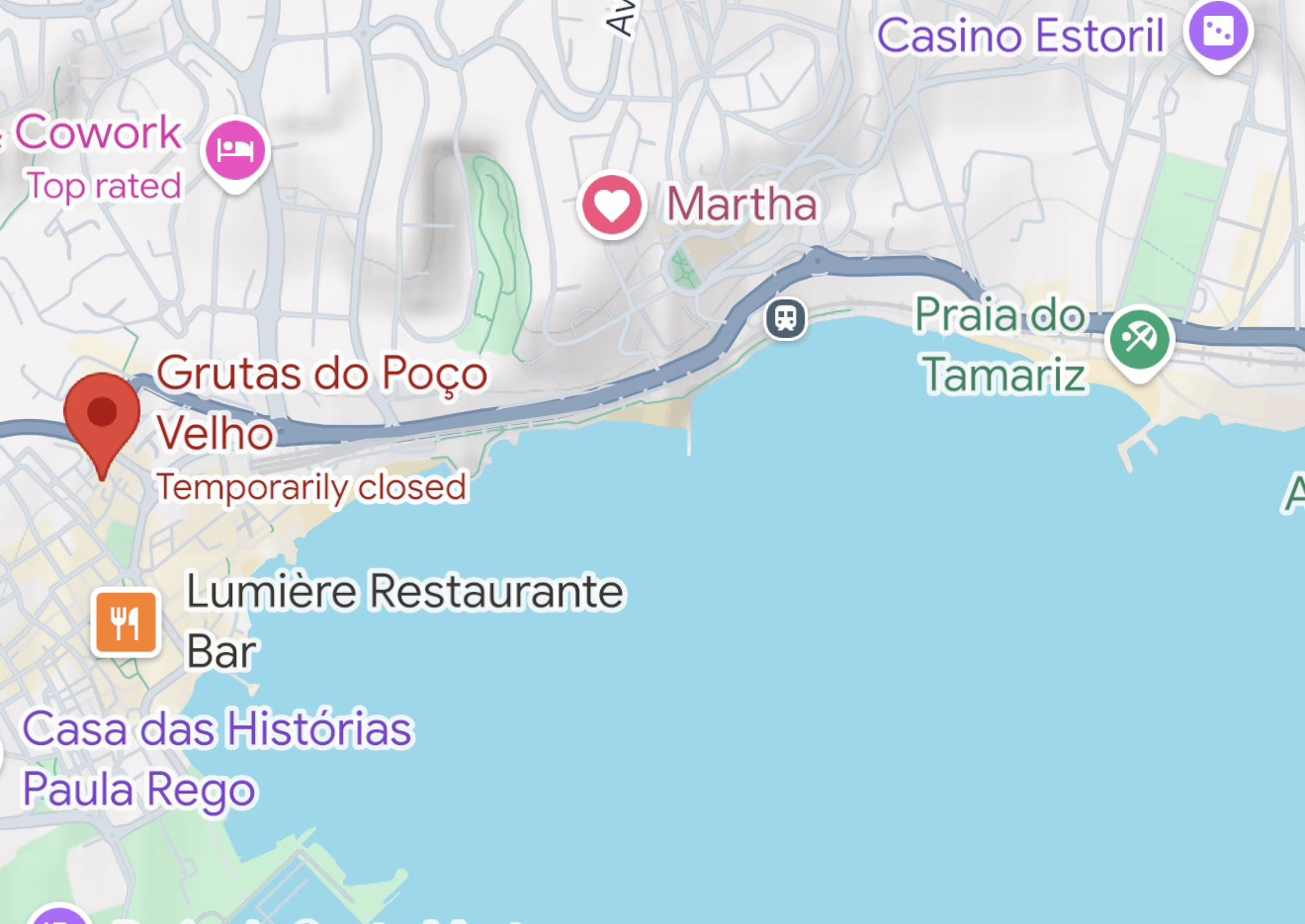
The oldest traces of human presence in Estoril date back thousands of years before anyone conceived of money. Archaeologists have found evidence of human settlement in what is today the municipality of Cascais going back to the Lower Paleolithic period, with stone tools discovered north of Talaíde at Alto do Cabecinho in Tires and south of Moinhos do Cabreiro. By the late Paleolithic and early Neolithic the first permanent settlements emerged, and the people of this coast began using natural caves like Poço Velho in Cascais (shown below as Grutas do Poco Velho)
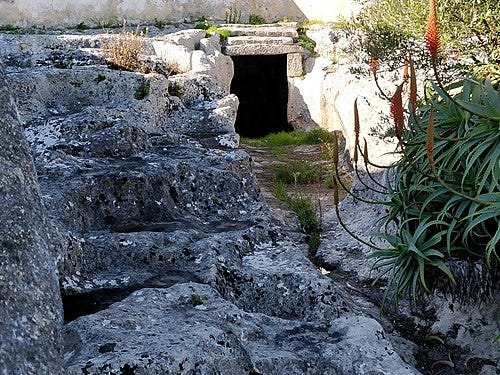
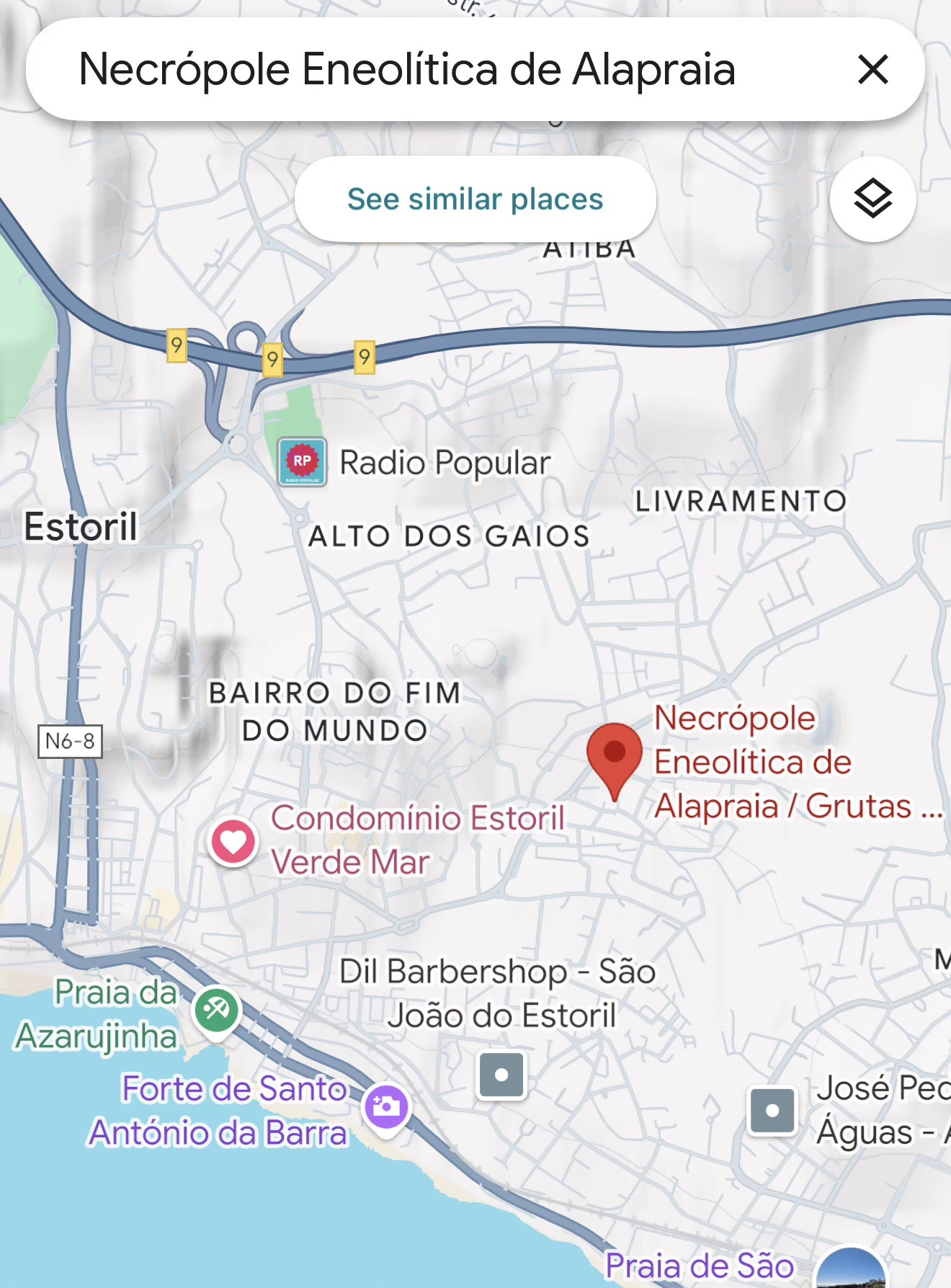
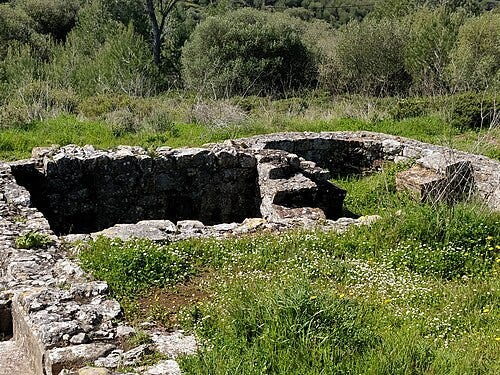
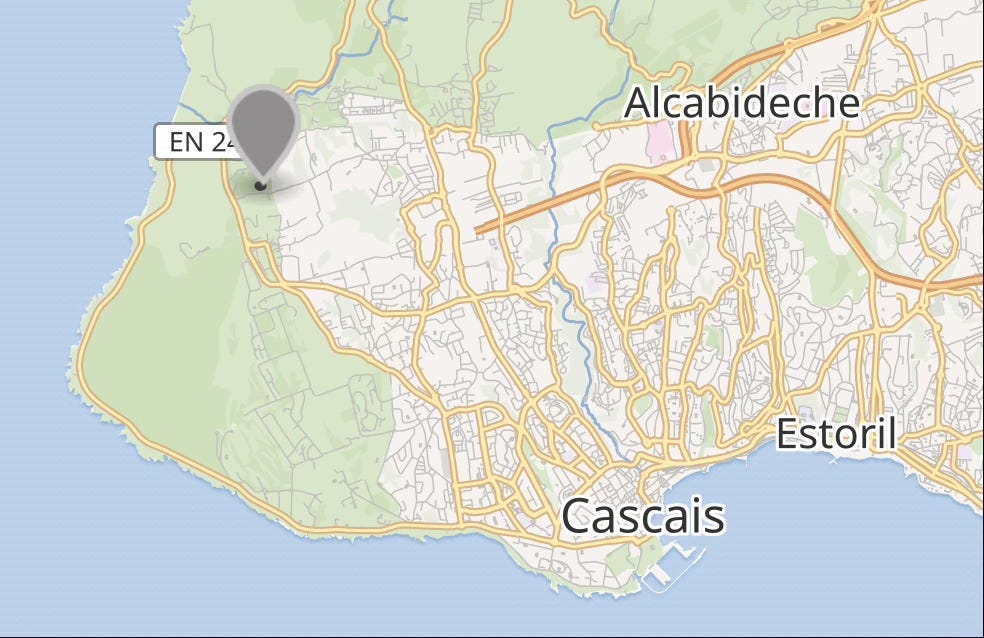
alongside the artificial burial caves at Alapraia and São Pedro, creating a continuous funerary landscape that stretched across what is now the entire Cascais-Estoril area. Between roughly 4000 and 3000 BC, during the transition from the Neolithic to the Chalcolithic period, ancient inhabitants carved four artificial caves out of marlstone rock in what is now called Alapraia, right in the center of modern Estoril. These weren’t homes but rather collective tombs, hypogea where communities buried their dead for over a thousand years. Each cave featured a long corridor leading to a circular chamber with a skylight at the top, allowing bodies to be lowered in even when the corridors became too crowded with earlier burials. The largest of these caves stretches 19 meters long with a spherical chamber over six meters in diameter. Archaeologists found funeral ceramics from different ages, votive limestone artifacts, and evidence that successive populations continued to use these sacred spaces generation after generation. Today, sadly, these remarkable monuments sit abandoned amid modern housing developments, filled with gravel to prevent people from throwing trash inside, visible only by the plaques that identify them. Here is a picture with their location:
Before the Romans imposed their roads and villas on this coastline, other peoples had already felt their way along these shores. Phoenician traders from the eastern Mediterranean sailed the Atlantic coast of Iberia seeking metals, salt, and purple dye, and while they left no identifiable structures in Estoril itself, the pattern of coastal trade they established would later be inherited by Roman and medieval merchants. Prior to the Romans (by the Iron Age), the wider region that includes Cascais and Estoril lay within a mosaic of tribal territories, it is suspected, had fortified hilltop settlements further along the Tagus estuary and inland ridges watching the routes that led to this coast, much like later sites such as Leceia in Oeiras or the high castles above Sintra still do today.
The first coins to circulate in this region arrived with the Romans after 205 BC, when they conquered Lusitania and incorporated it into their vast empire. While Estoril itself never had a mint, nearby Roman cities struck bronze and brass coins that would have been commonplace here. Just a few kilometers north at Casais Velhos, archaeologists discovered a substantial Roman villa from the second century that included elaborate baths, a wall, two cemeteries, and ceramic artifacts. The real treasure, though, were the coins dating between 205 and 450 AD, suggesting the villa remained occupied intensively through the final era of the Roman Empire. What makes this site particularly interesting is the discovery of tanks filled with murex shells, those spiny sea snails used to produce the legendary Tyrian purple dye. The inhabitants here were apparently involved in the purple dye industry, processing the shells and transporting the precious pigment to Olisipo, as Lisbon was then called, and from there to Rome itself.
The coins used during this Roman period came from major Lusitanian mints. From Pax Iulia, modern Beja about 90 kilometers southeast of Estoril, came bronze asses struck during the reign of Augustus between 27 BC and 14 AD. These coins bore the inscription PAX IVL, referencing the peace of Julius Caesar. You can see an example of the larger variant weighing 16.9 grams and measuring 29 millimeters in diameter here:
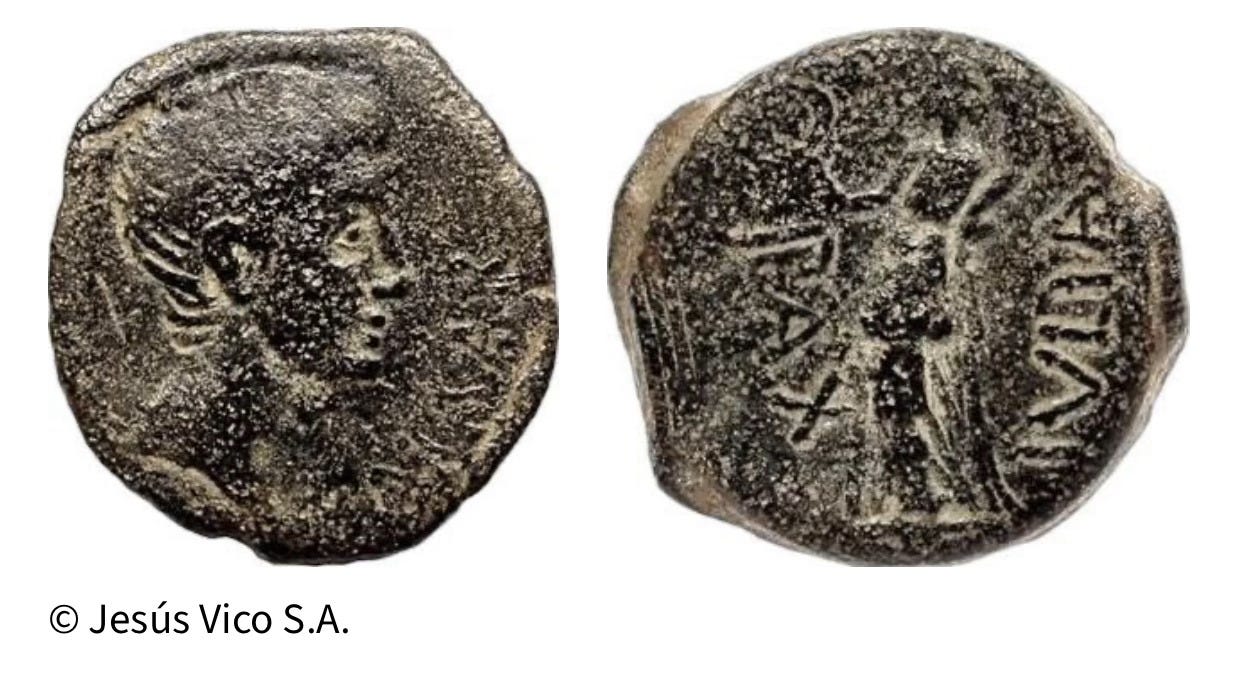
The obverse typically showed the head of Augustus while the reverse celebrated the peace and prosperity his rule brought to this province. Another important mint operated at Ebora, today’s Évora about 110 kilometers east, producing bronze dupondii inscribed with LIBERAL ITATIS IVLIAE EBOR, celebrating the liberal policies of the Julian family. These coins, measuring around 18 to 20 millimeters across, circulated widely in commerce. You can view a detailed example here:
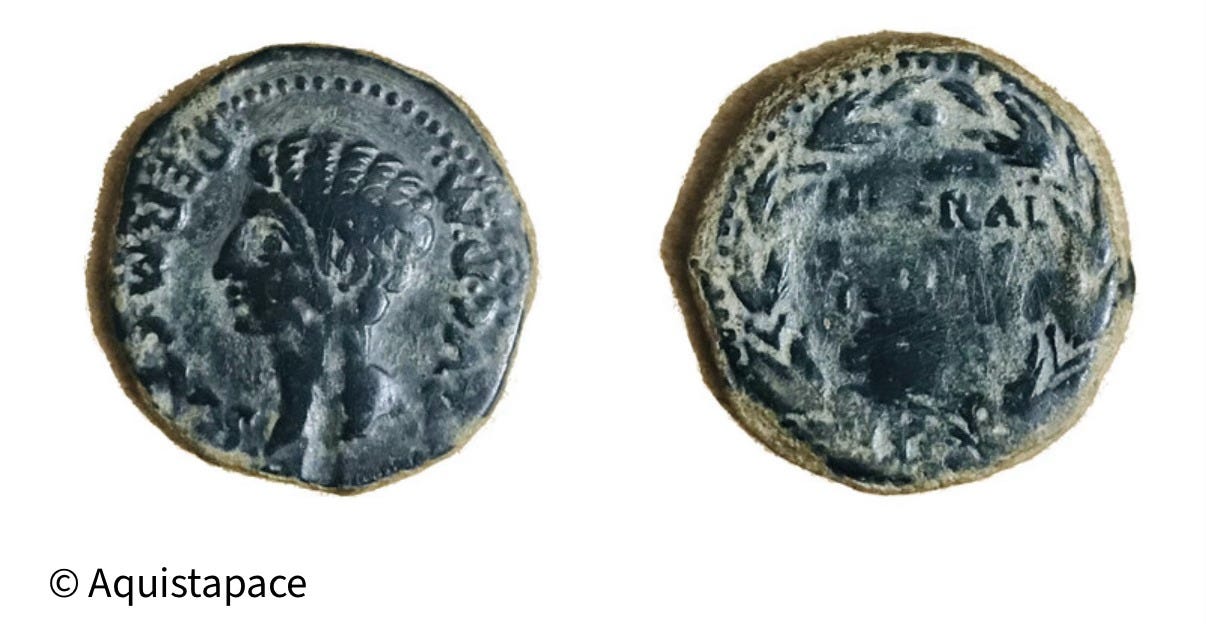
Holding one of these ancient bronzes in your hand, feeling its weight and examining the worn portrait of Augustus, connects you directly to people who walked these same coastal paths two thousand years ago.
When the Western Roman Empire collapsed in 476 AD, the Visigoths established their kingdom across Iberia, ruling until the Islamic conquest in 711. The Visigoths struck beautiful small gold coins called tremisses, each weighing about 1.5 grams and measuring 16 to 17 millimeters in diameter. These coins, worth one third of a solidus, featured the profiles of Visigothic kings and often included the mint name. One particularly relevant example for the Estoril area is a tremissis of Recaredo I struck at the Olisipona mint, ancient Lisbon just 30 kilometers west of here, between roughly 586 and 601 AD. You can see this delicate gold piece here:
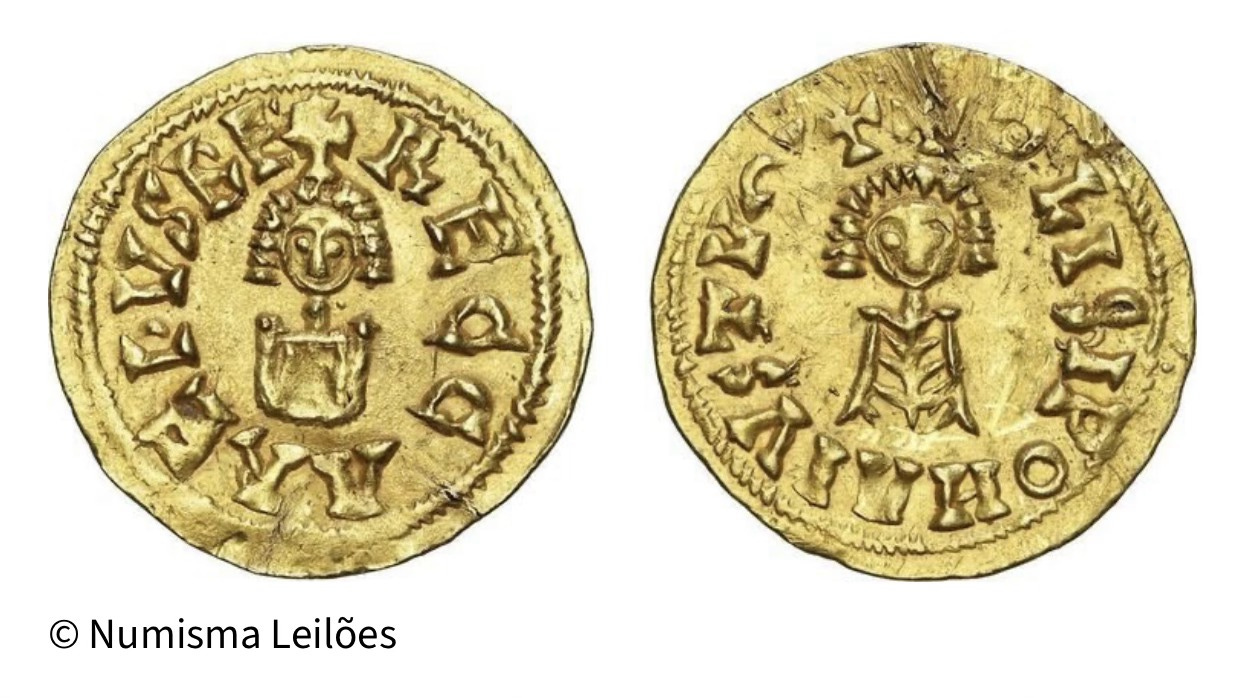
Another example from the Porto mint to the north, struck under King Leovigildo around 573 to 586 AD, shows how the Visigothic monetary system functioned across their kingdom (found here).
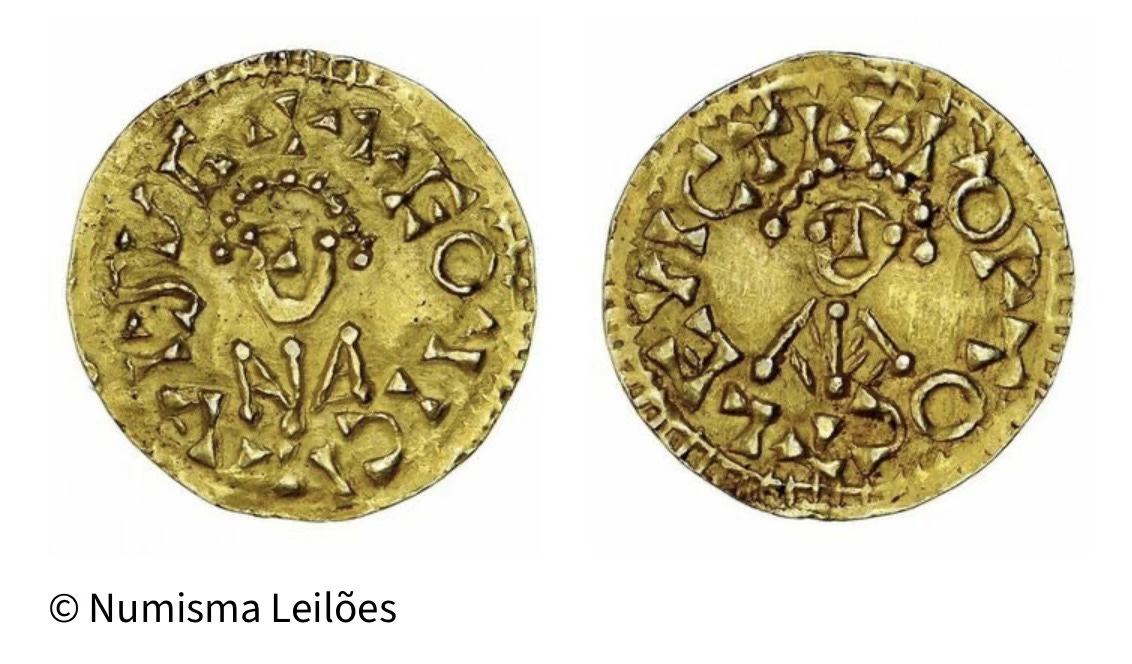
The purity and artistry of these tiny gold coins reflected the wealth and sophistication of Visigothic civilization, even as their kingdom faced constant pressures from within and without.
Everything changed in 711 when Muslim armies crossed from North Africa and conquered most of the Iberian Peninsula within just a few years. For over four centuries, until the Christian reconquest reached this coast in 1147, the Estoril region was part of Al-Andalus, the Islamic civilization that brought remarkable advances in science, architecture, agriculture, and commerce. The currency shifted entirely to the Islamic system of gold dinars and silver dirhams. The dirham became the standard coin of everyday commerce, struck in silver with Arabic calligraphy declaring the faith and naming the ruler and mint. A representative example from the reign of Muhammad I between 853 and 886 AD shows the typical style, weighing 2.63 grams and measuring 25 to 26 millimeters across. The dirham evolved over the centuries, with later examples from the reign of al-Hakam II around 976 AD showing refinements in the designs, which you can view here.
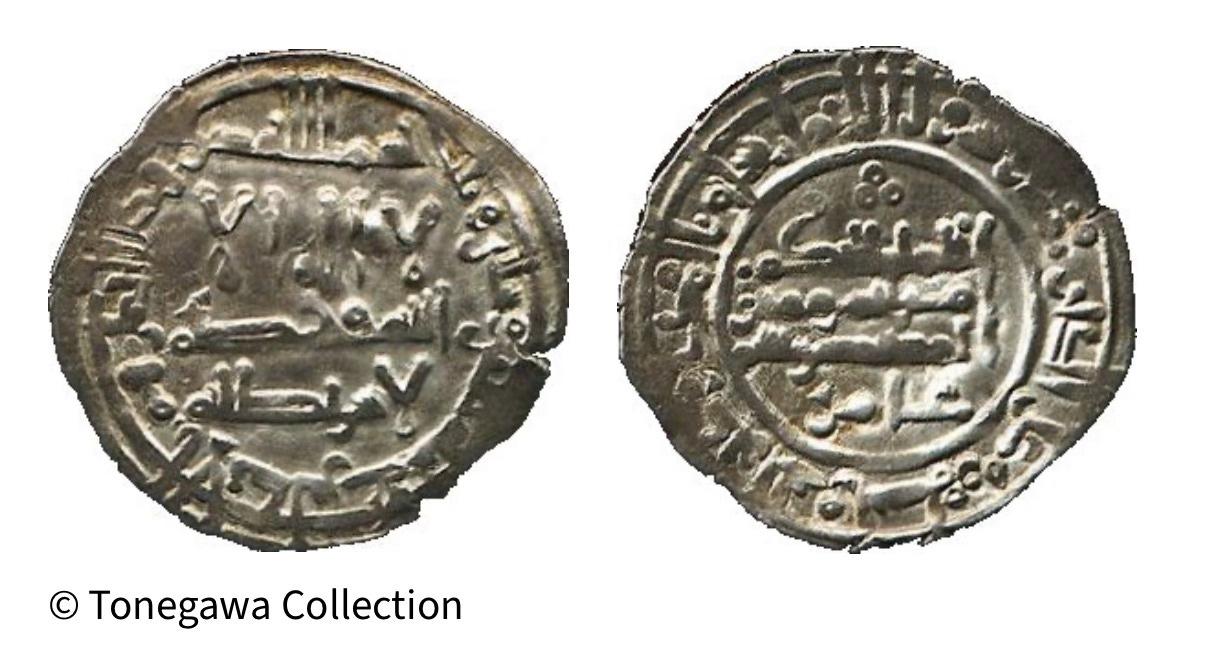
For larger transactions and long distance trade, gold dinars weighing four to five grams served as high value currency, while small bronze or copper fals coins of one to two grams handled the smallest market purchases. The comprehensive Islamic coinage of Al-Andalus can be explored here.
In 1147, Christian forces under Afonso Henriques, the first King of Portugal, conquered this coastal region as part of the broader Reconquista. The area around Estoril developed slowly at first as a small fishing and farming settlement under the administration of nearby Sintra. The name Cascais emerged during this period, a plural form of cascal meaning mountain of shells, referring to the enormous quantities of marine mollusks harvested from these productive coastal waters. By the 13th century, Cascais was supplying fish to Lisbon, and by 1364 the settlement had grown prosperous enough that King Peter I granted it town status, independent from Sintra. The people had to pay the Crown 200 pounds of gold annually and cover their own administrative costs, but such was the region’s wealth that these obligations were easily satisfied. Among the famous feudal lords who held these lands was João das Regras, a lawyer and professor at the University of Lisbon who played a crucial role in establishing the House of Aviz on the Portuguese throne.
The first Portuguese coins were dinherios, small billon pieces with varying silver content that Afonso I began striking after establishing the kingdom. As a numismatist, I find these medieval Portuguese coins endlessly fascinating because they evolved through so many design variants. Afonso I issued at least six different types of dinheiro between 1139 and 1185, each with distinctive imagery. The Bust type showed the royal profile and weighed about 0.6 grams of billon with 45 percent silver content. The A type featured a large letter A and contained only 35 percent silver. My favorite is the Double Crosier variant, showing two crossed ecclesiastical staffs symbolizing the partnership between church and crown in the Reconquista, struck in billon with 30 percent silver and weighing just half a gram. You can examine these different types here:
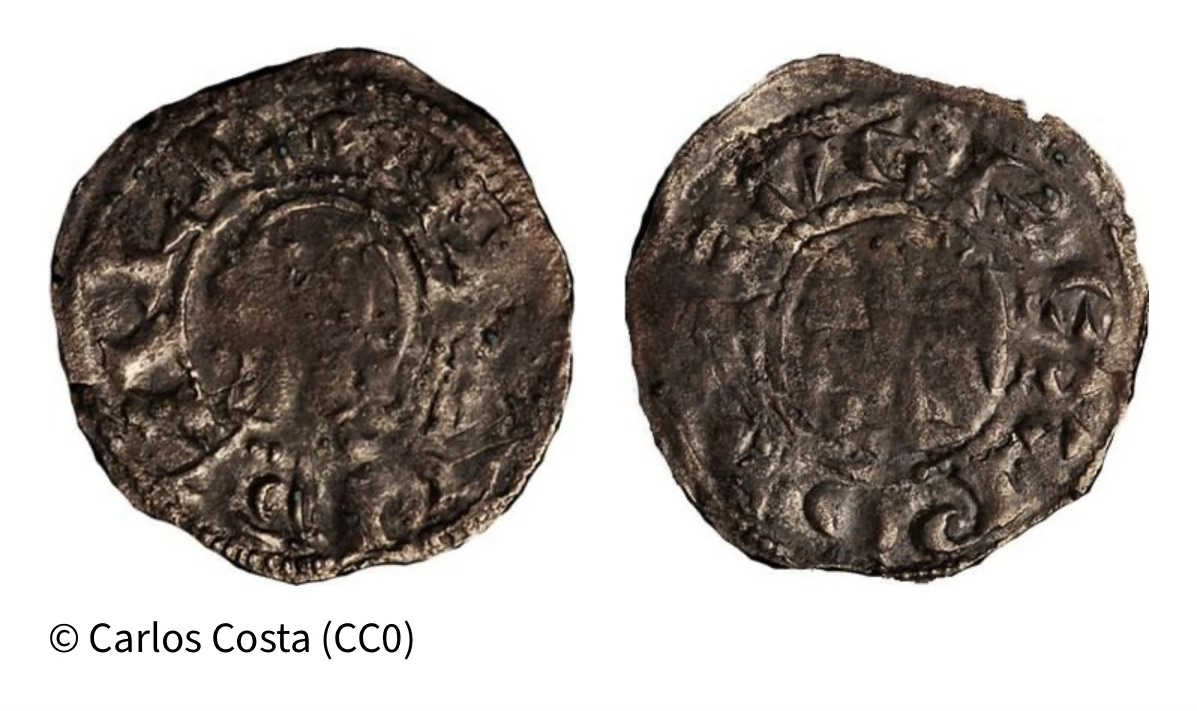
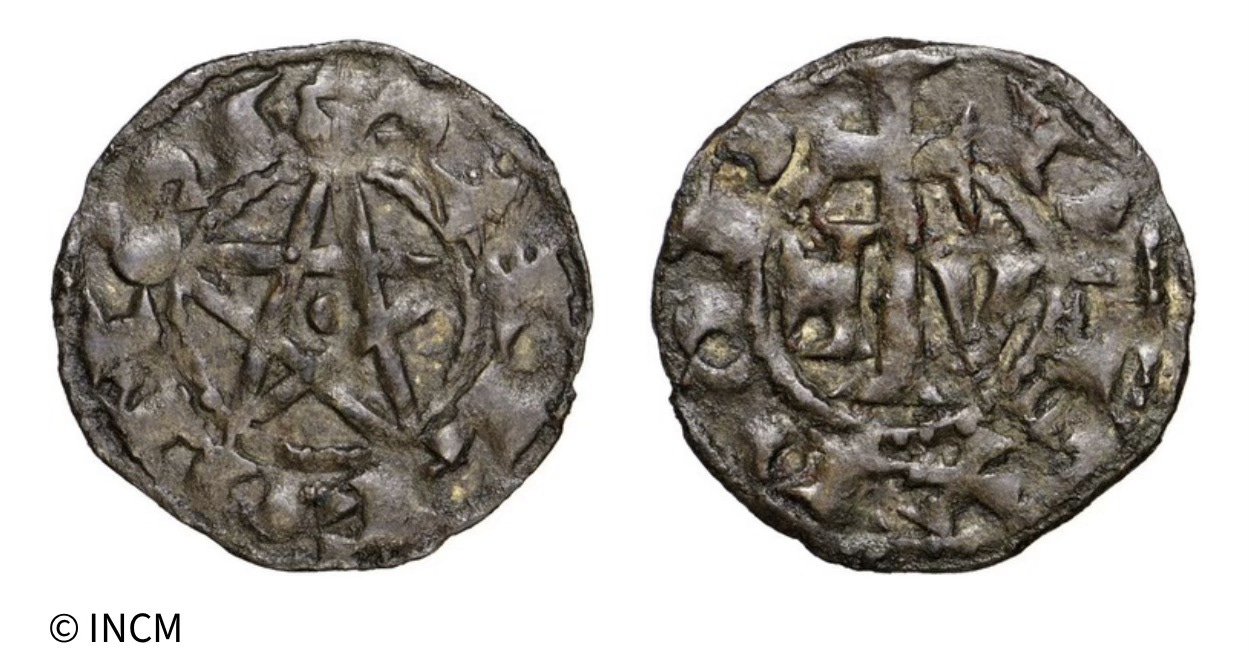
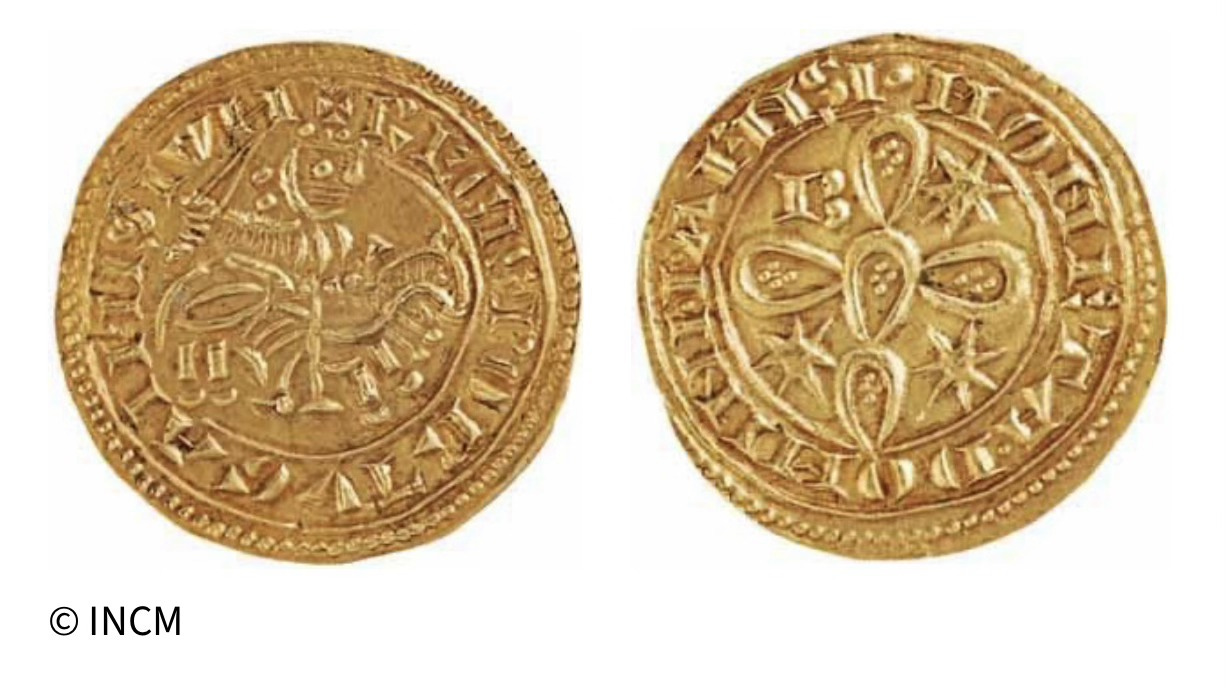
Later issues included a Pentagram design with a five pointed star and a Hexagram with a six pointed star that modern viewers sometimes mistakenly interpret through an anachronistic lens, though it simply reflected medieval symbolic vocabulary.
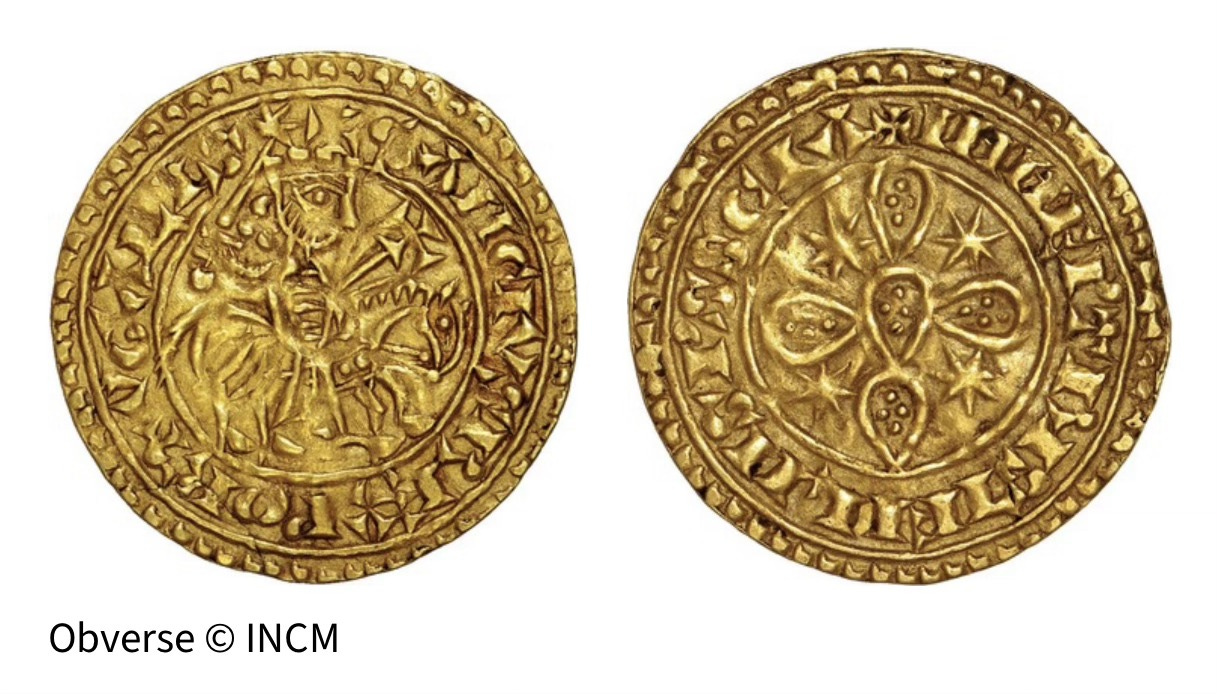
The monetary system became more sophisticated under Sancho I, who reigned from 1185 to 1211 and introduced the morabitino, a gold coin adapted from the Moroccan Almoravid dinars that Christian forces captured during their campaigns. The morabitino weighed four grams of 80 percent pure gold and became an important high value currency, with one morabitino equaling 180 dinherios. These were struck at multiple mints including Aeminium, modern Coimbra. The elegance and substantial weight of these gold pieces reflected Portugal’s growing power and commercial reach. You can view a morabitino of Sancho I here:
Throughout the 13th century, succeeding monarchs continued issuing dinherios of decreasing silver content as economic pressures mounted, but the basic monetary system remained recognizable.
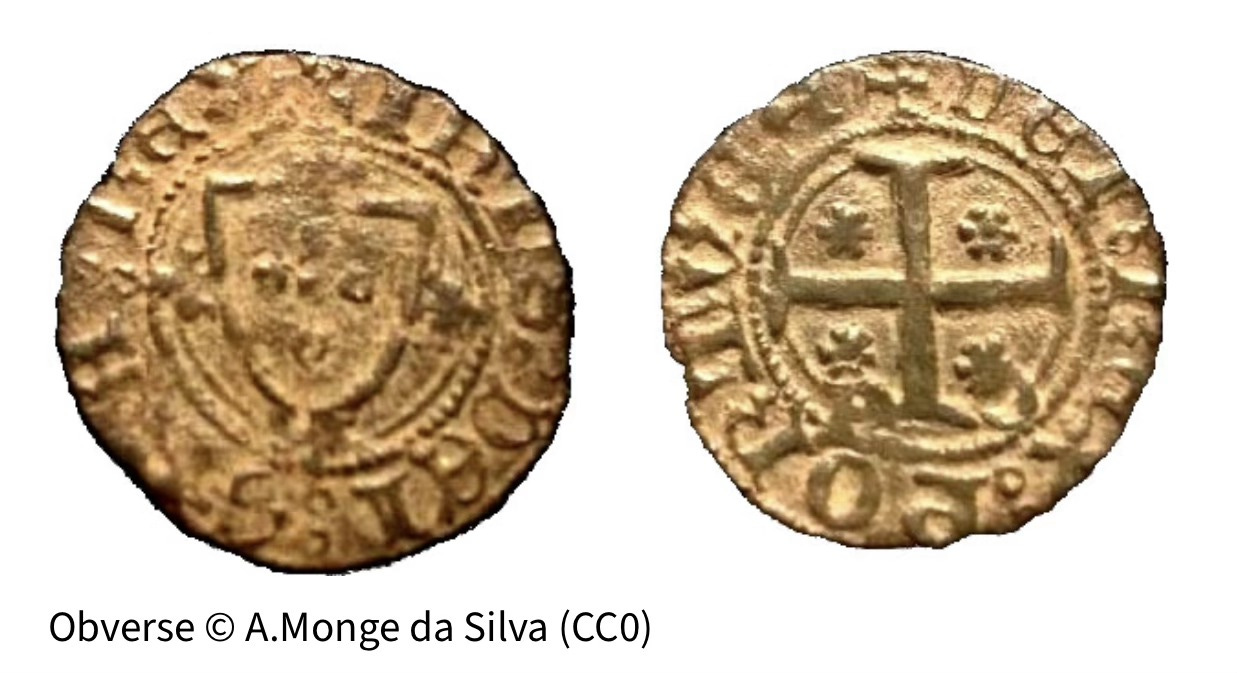
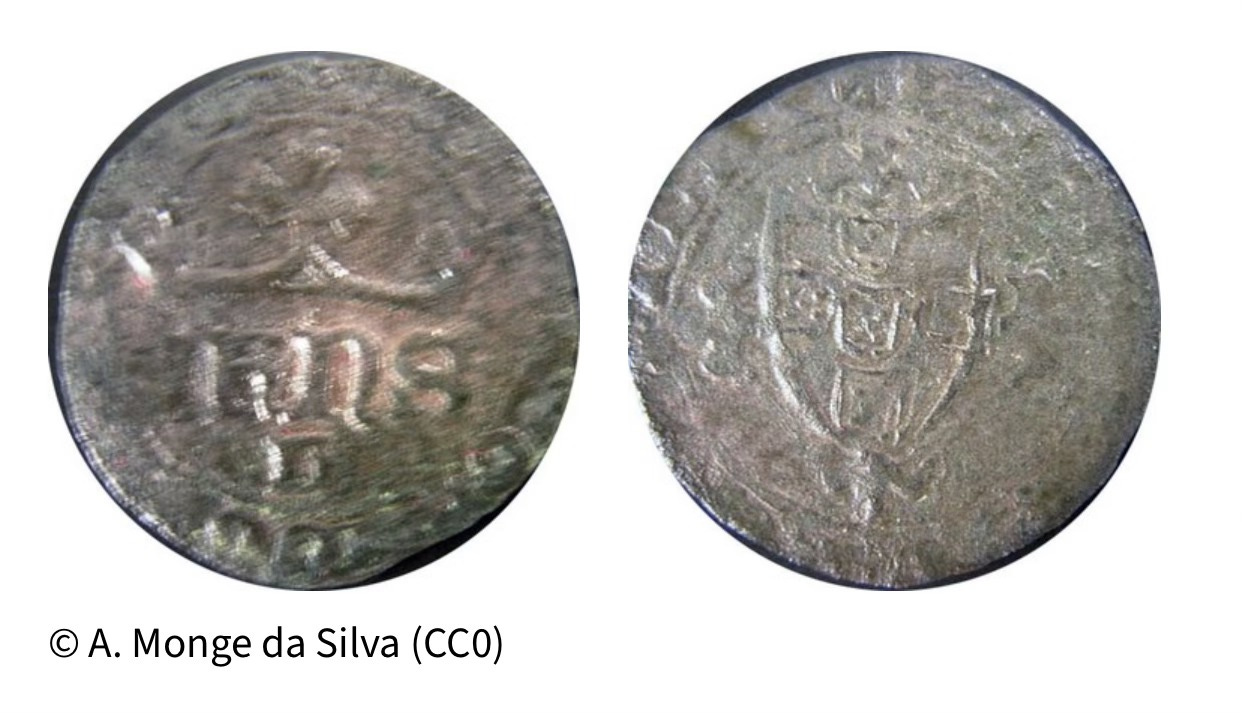
By the early 15th century, under João I who ruled from 1383 to 1433, Portugal introduced the Real Cruzado system with a complex hierarchy of fractional silver coins. The one fifth Real Cruzado struck at the Porto mint between 1408 and 1415 weighed just 0.65 grams of billon with 8.3 percent silver and equaled 168 dinherios, while the half Real Cruzado struck at the Lisboa mint served as a higher denomination in the same series. You can see the one fifth Real Cruzado here:
and the half Real Cruzado here:
These coins circulated along the coast here as Cascais continued its role as a fishing port and periodic residence for nobles traveling between Lisbon and estates farther west.
The Age of Discovery brought an explosion of silver coinage that transformed Portuguese commerce and left the pieces collectors hunt for today in antique shops. During the reign of Manuel I from 1495 to 1521, Portugal established the tostão as its primary silver denomination, a large hammered coin weighing around 9.3 to 9.8 grams of 91.6 percent silver and measuring 28 millimeters in diameter. These tostões bore Manuel’s royal titles on the obverse surrounding a shield and the inscription IN HOC SIGNO VINCES, “In This Sign You Shall Conquer,” on the reverse around the Cross of the Order of Christ. The Lisboa mint struck several variants identifiable by small letters or symbols in the fields, such as the L variant here:
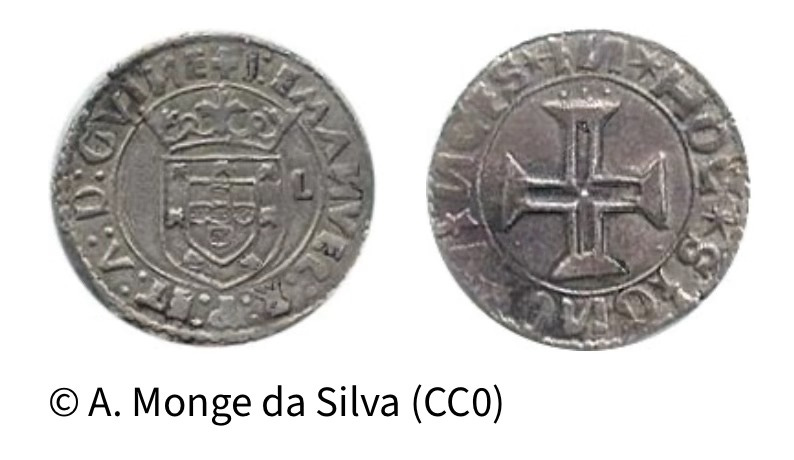
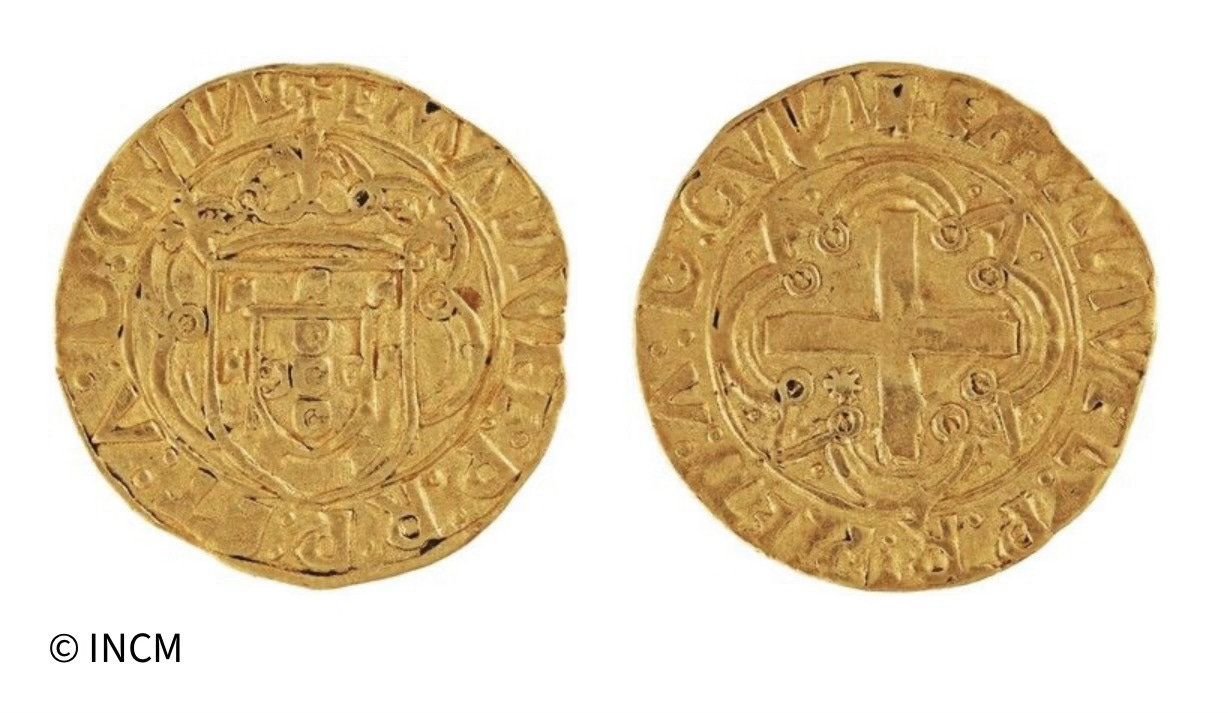
These substantial silver pieces paid for spices from India, silk from China, and the wages of sailors who opened the sea routes that made Portugal rich beyond measure. Manuel I also continued striking gold cruzados inherited from João I’s system, with the Lisboa mint producing pieces you can see here:
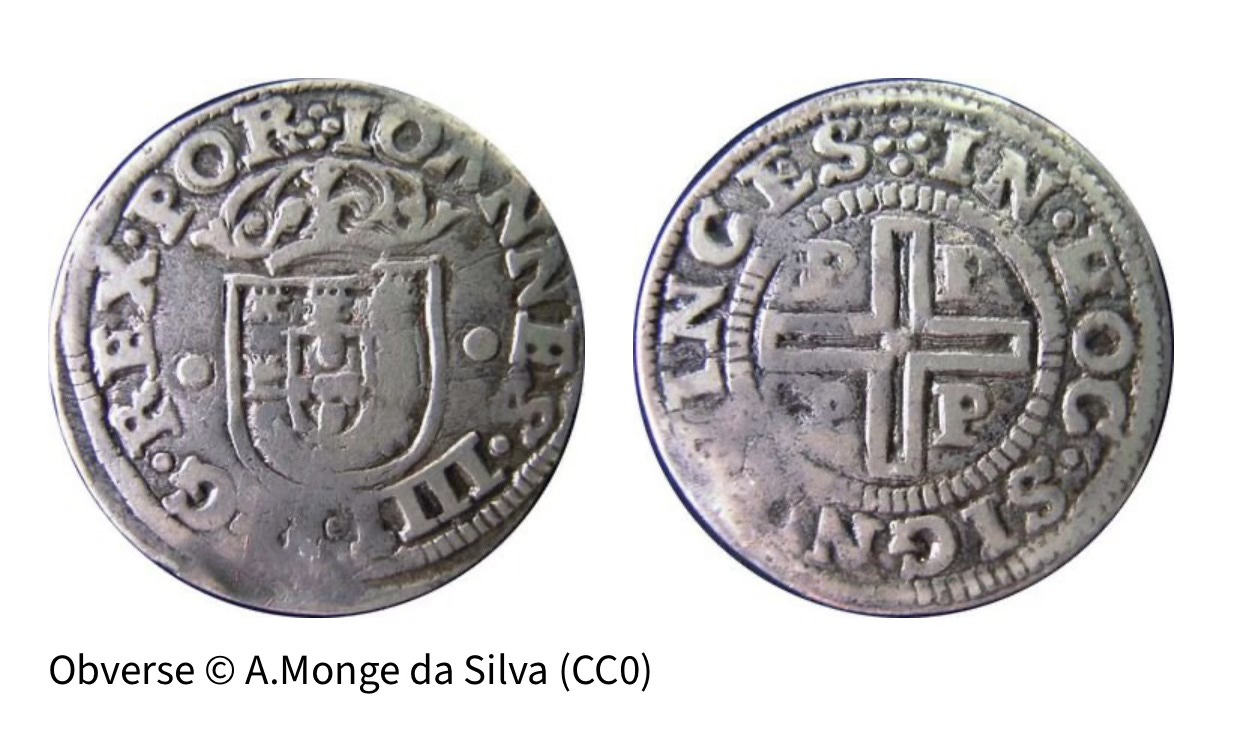
Throughout the reigns of João III from 1521 to 1557, Sebastião I from 1557 to 1578, and the subsequent rulers during and after the Iberian Union, silver tostões and their fractions remained the workhorse of Portuguese commerce. João III issued tostões closely following Manuel I’s designs along with smaller silver coins like the meio tostão (half tostão) and the vintém worth one twentieth of a tostão. When Portugal restored its independence in 1640 under João IV, nicknamed O Restaurador (the Restorer), the new king immediately struck silver tostões at both Lisboa and Porto mints to assert monetary sovereignty, identifiable by the inscription IOANNES IIII DG REX POR on the obverse surrounding the Portuguese shield and the familiar IN HOC SIGNO VINCES motto on the reverse encircling the Cross of Christ. The Porto mint tostão can be seen here:
the Lisboa first series here:
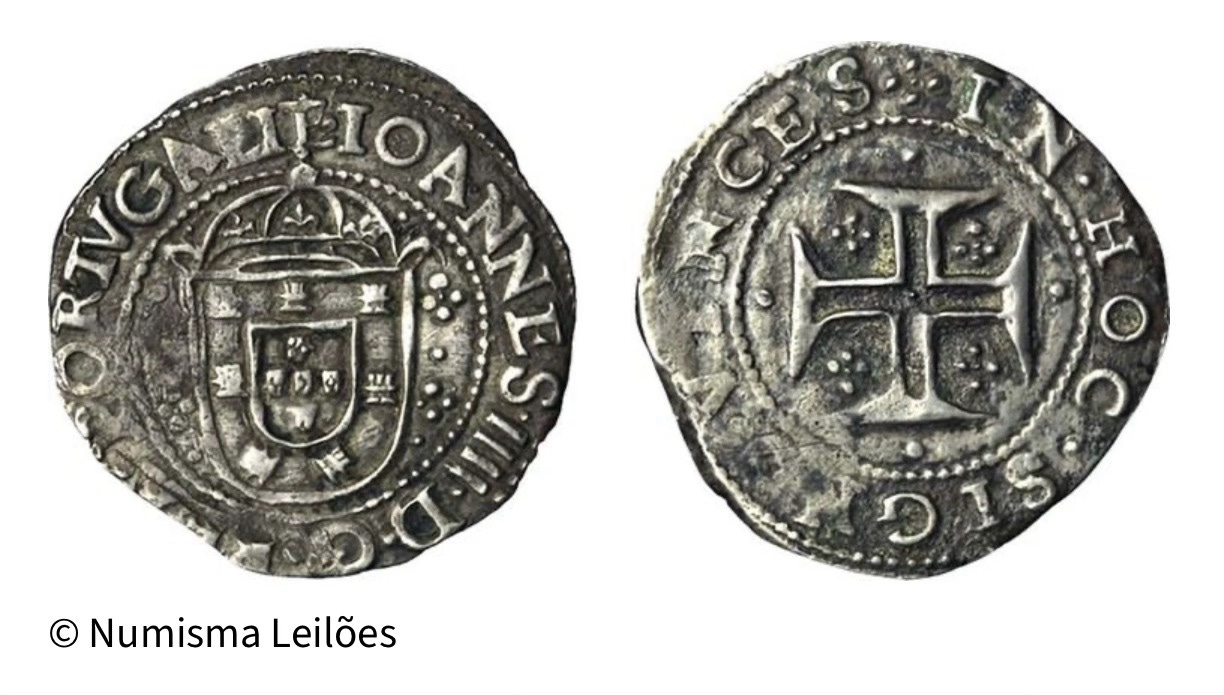
These 17th century silver coins, now greenish or blackened with age from oxidation that forms when silver’s copper alloy content reacts with sulfur in the air, remain recognizable by their Cross of Christ and Portuguese shield design that continued the IN HOC SIGNO VINCES tradition established by Manuel I a century earlier. The Real system with its hierarchy of gold cruzados, silver tostões, and copper reals persisted all the way to 1835 when decimal reforms modernized the Portuguese monetary structure.
As the Middle Ages progressed, the strategic value of this stretch of coast became impossible to ignore. In 1488 King John II ordered a defensive tower at the mouth of the Cascais bay to guard the approaches to Lisbon, which would later be incorporated into stronger fortifications. When the Spanish Habsburgs took over the Portuguese crown in 1580, King Philip I massively enlarged these works into the Renaissance style Citadel of Cascais, with a characteristic low profile and star shaped plan, and after Portugal restored its independence in 1640 a network of a dozen bulwarks and redoubts was built along the coast to protect the Tagus estuary that Estoril looks onto today.
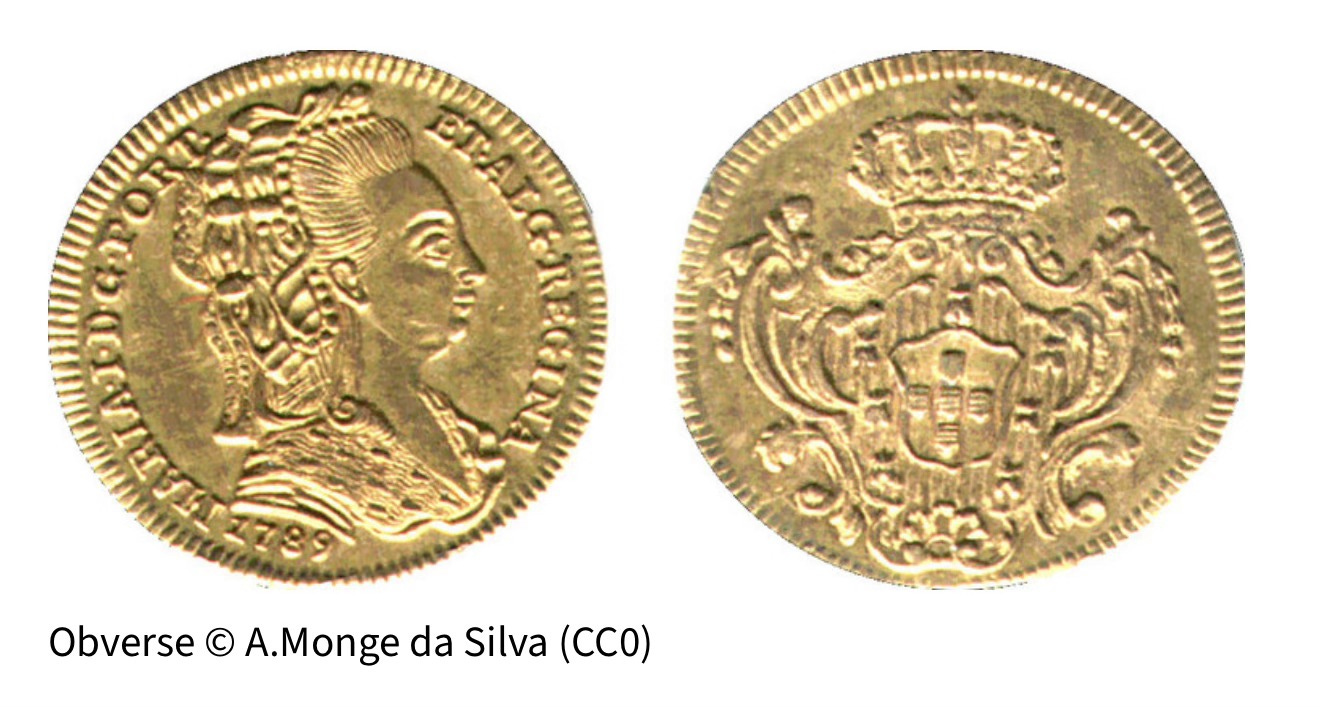
The catastrophic Lisbon earthquake of November 1, 1755, which struck at 9:40 in the morning with an estimated magnitude between 7.7 and 9.0, devastated the region. The Cascais Citadel suffered considerable damage, and tsunami waves swept the coast. The Church of Santo António in Estoril had to be rebuilt after the destruction. In the aftermath, Portugal reformed its currency, and under Queen Maria I, who reigned from 1777 to 1816, the escudo emerged as a major gold denomination. The escudo struck at the Lisboa mint during Maria’s reign came in several variants, including the elegant pieces from her widowhood period featuring her veiled portrait. The half escudo from this era represents the refined artistry of late 18th century Portuguese minting, and you can view an example here:
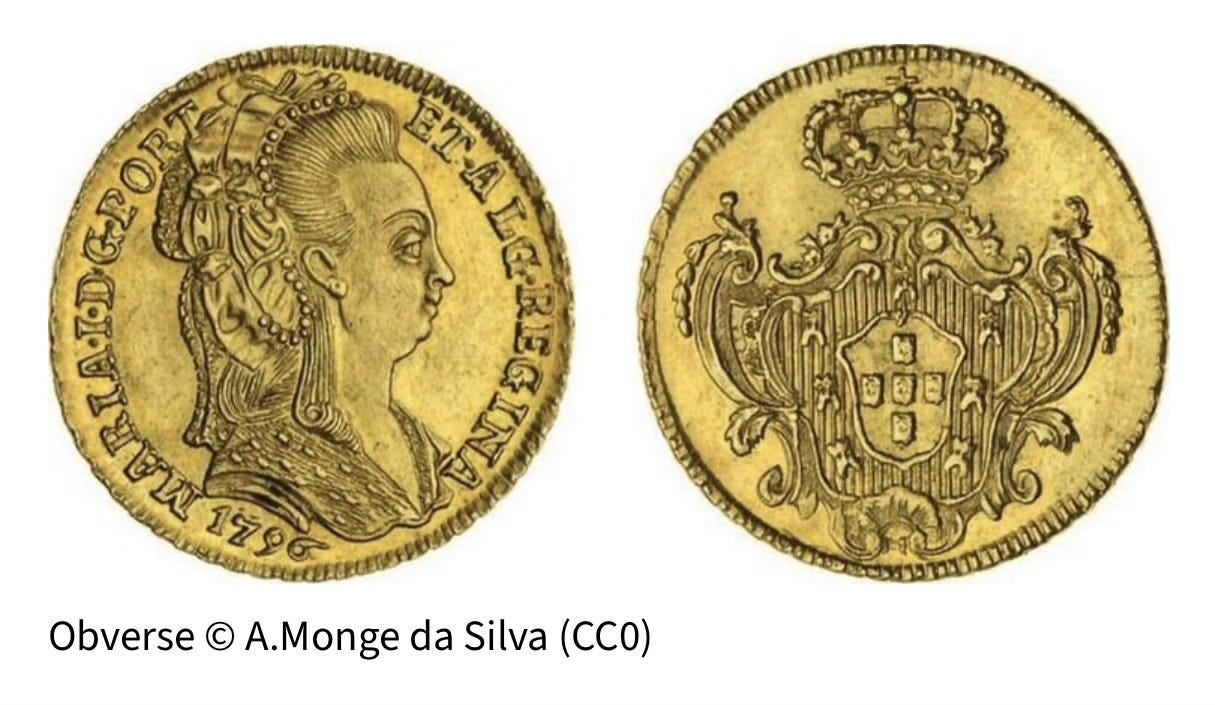
The full escudo is here:
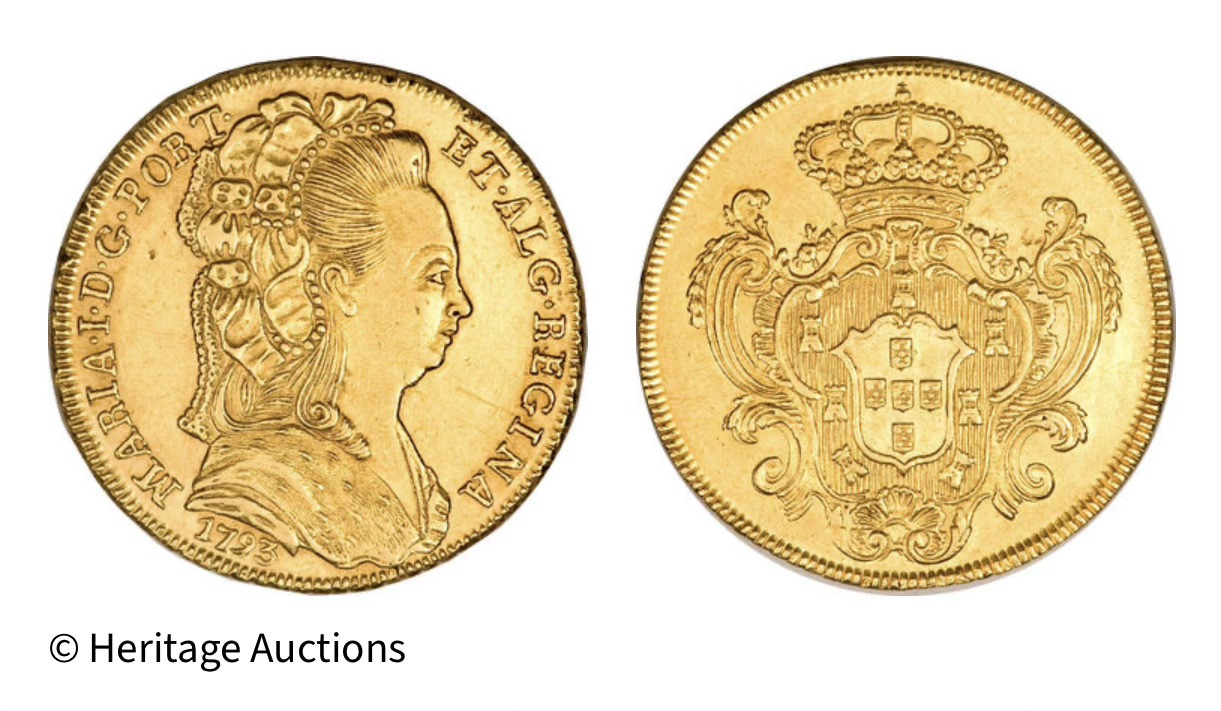
The largest denomination, the peça weighing 14.3 grams of gold and measuring 32 millimeters across, represented substantial wealth and can be seen here:
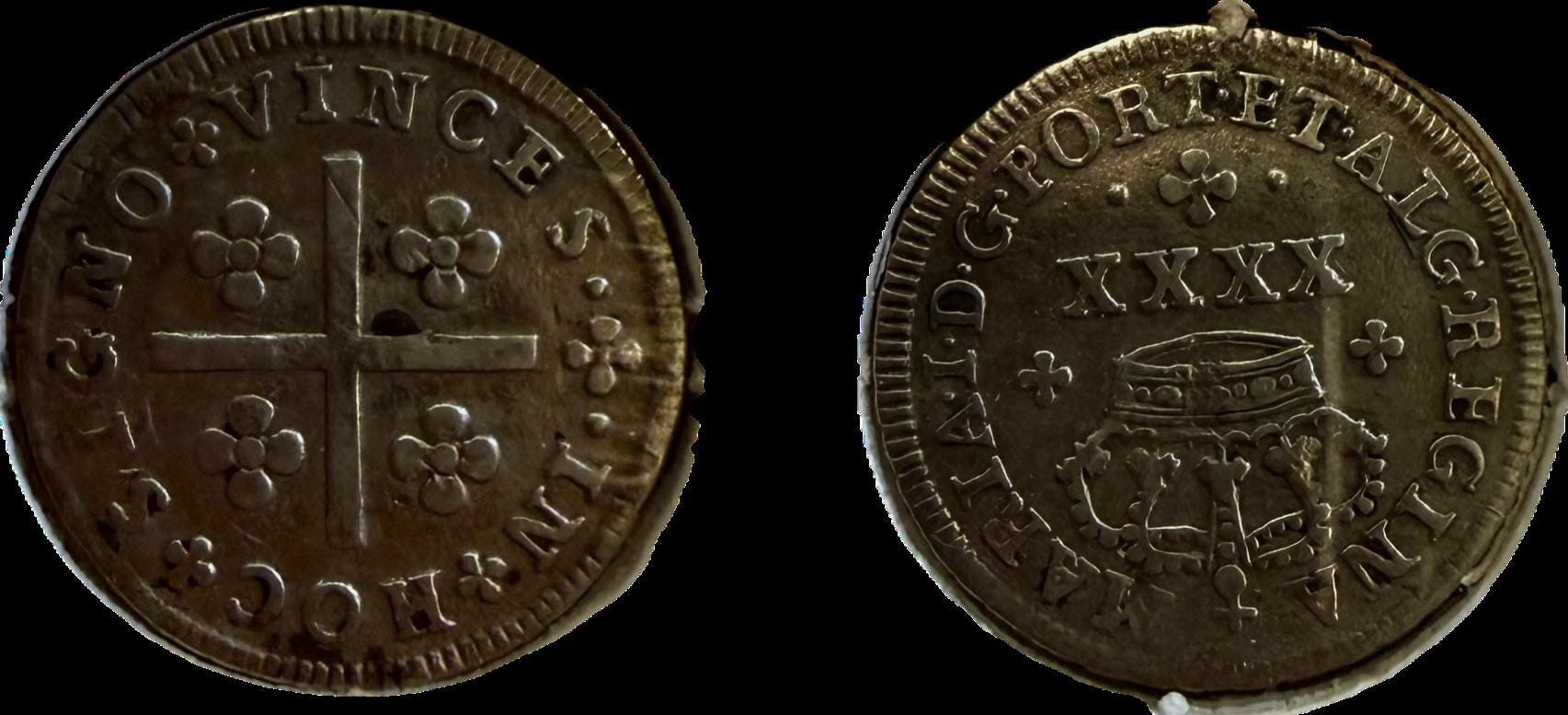
I purchased the following silver ½ Tostão from the reign of Maria I at the coin show that goes on each Sunday morning in Lisbon at Mercado das Coleções at Mercado da Ribeira this morning. This represents the standard circulating coin of the time.
Even before Estoril itself took shape, this coast was already becoming a playground for European elites. In the 19th century, writers, aristocrats, and wealthy travelers were drawn first to Sintra’s romantic palaces and exotic landscapes, then gradually down to the seaside as railways and new roads improved access. When King Luís I and the royal court began spending their summers here, the broader Portuguese Riviera was born, and by the end of that century Cascais and its neighboring beaches had gained a reputation for sandy shores, leafy promenades, grand hotels, and palatial villas that attracted foreign nobility and Lisbon’s own financial and political elite.
The transformation of Estoril from a sleepy coastal area into one of Europe’s most glamorous resorts began in 1870, when King Luís I chose the Cascais Citadel as his official summer residence. The Portuguese nobility immediately followed the royal example, building grand villas along the coast and establishing what became known as the Portuguese Riviera. The railway reached Estoril on August 10, 1891, and extended to Cascais on September 4, 1895, connecting the area directly to Lisbon and making it accessible to international visitors arriving on the Sud Express luxury train service that linked Lisbon to Paris. In 1913, two entrepreneurs named Fausto de Figueiredo
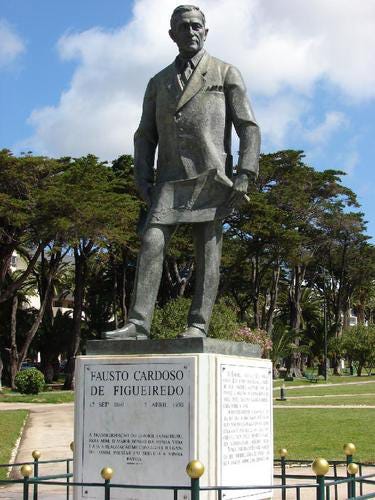
and Augusto Carreira de Sousa purchased the Quinta do Viana in Santo António do Estoril and hired the architect Henri Martinet to design a revolutionary seaside resort with climate spa facilities and sports amenities. Construction began in 1914 with approximately 200 men excavating and creating landfill for the Arcadas do Parque, palm lined avenues, and extensive leisure facilities.
On January 16, 1916, President Bernardino Machado laid the first stone of the Casino Estoril, though the building would not officially inaugurate until 1931. The casino quickly became one of Portugal’s most famous attractions and remains today one of the largest working casinos in Europe. During the 1920s, grand hotels like the Grand Hotel and Grand Hotel d’Italie opened in Monte Estoril, and the area developed into a fashionable destination modeled on the French Côte d’Azur. The Sud Express made Estoril its terminus in 1930, replacing the previous arrangement, and the railway line was fully electrified that same year, earning the coast its nickname of A Linha, The Line.
The most dramatic chapter in Estoril’s history unfolded during World War II, when Portugal’s neutrality transformed this elegant resort into an improbable crossroads of espionage and exile. The Portuguese government signed a non aggression treaty with Franco’s Spain and refused to join the Axis, creating a neutral haven where refugees, spies, and dispossessed royalty gathered in an atmosphere of precarious peace. The exiled monarchs who took up residence here during the war years read like a roster of European nobility, including the Duke of Windsor and Wallis Simpson, the Spanish royal family, King Carol II of Romania, and Regent Miklós Horthy of Hungary. The Casino Estoril and the Hotel Palácio became the nerve centers of this shadow world, where Allied and Axis intelligence agents met, gambled, drank excellent cocktails, and tried to extract secrets from one another.
The Germans established their operations at the Hotel Atlântico, the Grande Hotel do Monte Estoril, and the Hotel do Parque. Meanwhile, figures like actress Zsa Zsa Gabor and actor Leslie Howard, who were working with Allied intelligence, made Estoril their base. The most famous visitor, though, was Ian Fleming, the British naval intelligence officer who arrived in May 1941 as personal assistant to Rear Admiral John Godfrey, director of the Naval Intelligence Division. Fleming and Godfrey were traveling to Washington to help the Americans create what would become the Office of Strategic Services, forerunner of the CIA. On the return journey that summer, Fleming stopped again in Lisbon and made his headquarters at the Hotel Palácio in Estoril specifically because it adjoined the casino where he could gamble and featured a bar that served excellent cocktails. His mission was to observe the activities of Dušan Popov, a Serbian double agent working for both German Abwehr and British intelligence.
Popov was exactly the kind of character that would fascinate a novelist like Fleming. He was a gambler with a taste for women and expensive drinks, suave and dangerous in equal measure. Fleming watched Popov frequent the casino and noted his style, his confidence, his ability to move between worlds. Years later, Fleming would openly acknowledge that Popov served as one of the primary inspirations for James Bond. The Hotel Palácio itself became a location in Fleming’s novel On Her Majesty’s Secret Service, which was later filmed there in 1969. The casino’s glamorous and sophisticated atmosphere provided the perfect model for Casino Royale, Fleming’s first Bond novel. The wartime drama at Estoril wasn’t just atmosphere, though. After the war, hidden microphones were discovered installed in the walls, under carpets, and even inside lamps at the Hotel Palácio, evidence that the Germans had been eavesdropping on supposedly private Allied conversations the entire time.
Another remarkable double agent operating from Estoril was Joan Pujol Garcia, code named Garbo by the British. His mission for MI5 involved feeding false information to German Abwehr about the Normandy landings, convincing the Nazis that the D Day invasion was merely a decoy and that the real landing would come two weeks later at Pas de Calais. This deception proved crucial to the success of the Allied invasion. For his work, Garbo was awarded the Order of the British Empire by King George VI in November 1944. Not every spy survived the dangerous game, though. Leslie Howard, the well known American actor and director who was suspected of collaborating with British intelligence, was killed when German fighters attacked his plane leaving Lisbon in 1943. Also killed was Tyrell Shervington, director of Shell in Lisbon and a close associate of the British secret service.
During the war years and through the decades that followed, Portuguese currency continued using the escudo system that had been established in earlier centuries. The 5 October 1910 revolution that overthrew the monarchy and established the First Portuguese Republic brought new coin designs commemorating the republican victory. The 1 Escudo coin issued from 1914 onward featured the Portuguese crest on a stylized globe with surrounding wreath on the reverse and a fasces, that bundle of rods with an axe representing republican authority and unity, on the obverse. You can see this commemorative coin here:
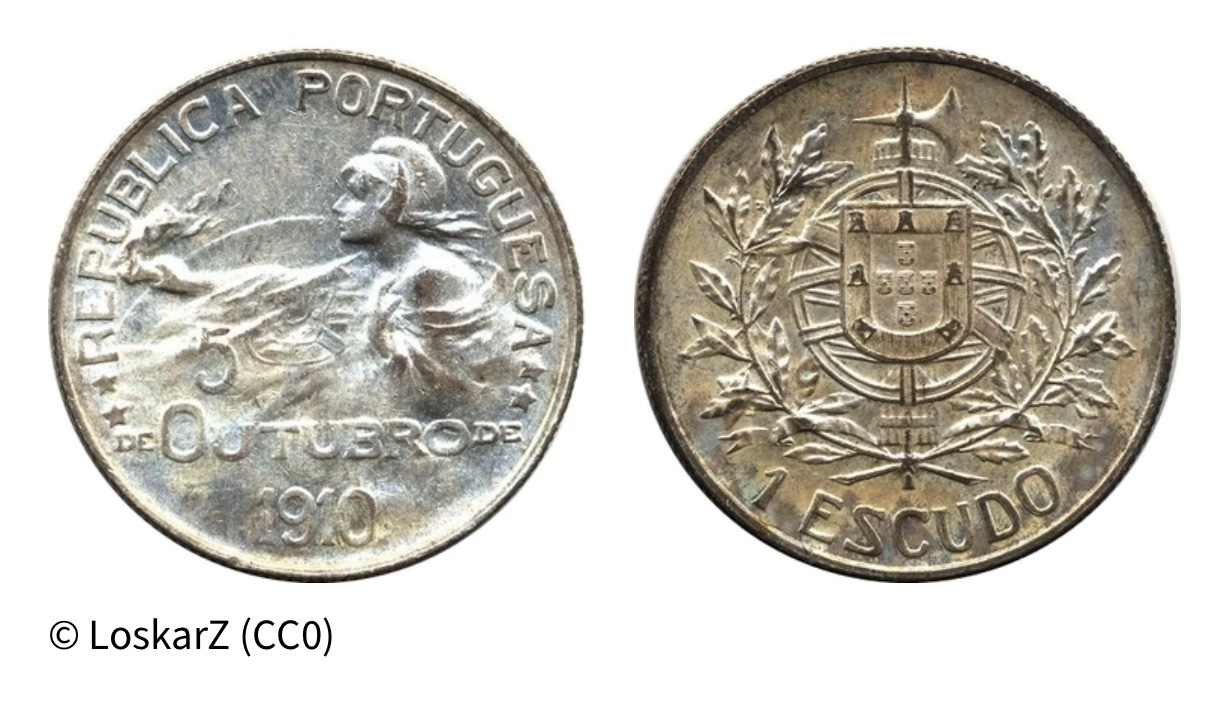
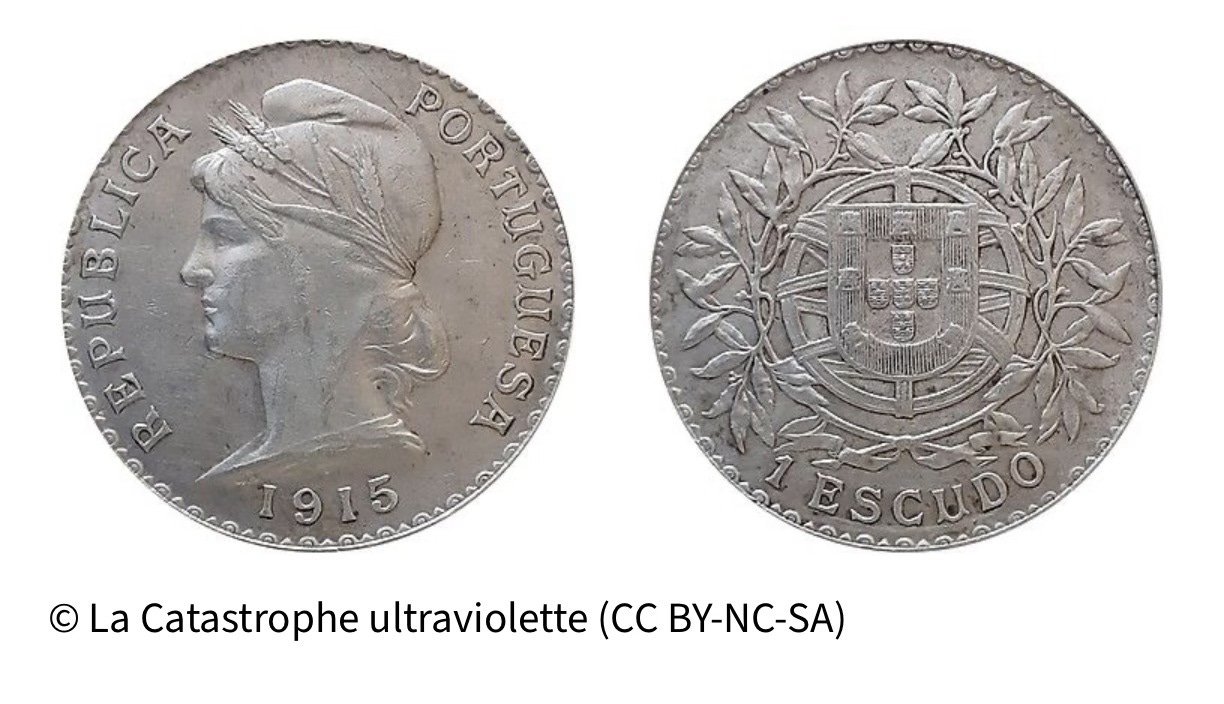
A 1915 variant with Liberty’s head facing left and the shield within a decorated circle represents the evolving republican iconography here:
After World War II ended, Estoril’s role as a spy capital faded, but its reputation as a luxury destination only grew. In the decades after the war, Estoril steadily shifted from a glamorous refuge for spies and exiled royalty into a fully fledged international resort. The construction of new hotels, apartment blocks, and the coastal road along the sea accelerated a tourist boom that spread from Cascais through Monte Estoril and São João do Estoril, supported by the easy rail link to Lisbon and the improving road network. By the late 20th century and into the early 21st, this strip of coastline had become one of Portugal’s most expensive and sought after residential areas, mixing luxury real estate, international schools, golf courses, marinas, and year round tourism under the mild Atlantic climate that first drew the royal family here. The 1960s brought major expansion to the Casino Estoril under architects Filipe Nobre de Figueiredo and José Segurado. In January 1965, the massive Hotel Estoril Sol opened with 21 floors and 404 bedrooms, becoming Portugal’s largest hotel with striking modernist architecture that contrasted sharply with the Belle Époque style of the older establishments. On June 18, 1972, the Autódromo do Estoril racing circuit inaugurated in the hills behind the town.
Just two years later, on April 25, 1974, the Carnation Revolution brought down the Estado Novo dictatorship that had ruled Portugal since 1926. Military officers of the Armed Forces Movement carried out their coup with minimal violence, and civilians famously placed carnations in the soldiers’ gun barrels as symbols of peaceful transition. The revolution restored democracy and granted independence to Portugal’s African colonies, fundamentally transforming the nation.
The racing circuit at Estoril became internationally famous when it hosted the Portuguese Grand Prix from 1984 to 1996, except for one year. I remember the excitement when Niki Lauda won his third and final Formula 1 World Championship here on October 21, 1984, by the narrowest margin of half a point in a dramatic season finale. The following April, in torrential rain, a young Brazilian driver named Ayrton Senna won his first ever Formula 1 victory at Estoril. Over those thirteen years, the greatest drivers of the era including Prost, Mansell, Berger, Schumacher, Hill, Coulthard, and Villeneuve all claimed victories here. The last Portuguese Grand Prix took place on September 22, 1996, when Jacques Villeneuve executed a spectacular outside pass on Michael Schumacher at the Parabólica corner that is still celebrated as one of the great overtaking maneuvers in Formula 1 history.
Portugal finally abandoned the escudo and adopted the Euro on January 1, 2002, joining the European monetary union. The Portuguese 1 Euro coin features a beautiful design with the royal seal of 1144 from Afonso Henriques, Portugal’s first king, surrounded by the seven castles and five coats of arms from the Portuguese flag and the twelve stars of Europe. The coin is bimetallic, with a copper nickel clad nickel center in a nickel brass ring, weighing 7.5 grams and measuring 23.25 millimeters in diameter. The reverse shows the map of the 15 member European Union as it existed when the coins were first issued.
Living here now in 2026, I walk past the Casino Estoril on my evening strolls and think about all the history these streets have witnessed. I imagine the Neolithic people carrying their dead to those artificial caves, the Roman merchants discussing purple dye exports over bronze asses, the Visigothic nobles weighing out gold tremisses, the Muslim traders calculating prices in silver dirhams, the medieval fishermen receiving their payment in Portuguese dinherios, and the wartime spies gambling away their evenings while the fate of Europe hung in the balance. The coins tell these stories if you know how to read them, each one a small witness to its moment in time. That is why I love numismatics so deeply, because through these pieces of metal that passed from hand to hand across the centuries, I can touch the past and feel connected to everyone who ever called this beautiful coast home.